Steampunk Spotter
Meet McChain: The Spotter Crew's Supply Chain Manager
July 30, 2026 - Words by Lucija Korbar - 3 min read
Every crew needs someone who builds the foundation before anything else can run. On the Spotter Crew, that’s McChain — and nothing gets bolted into the chain until he’s checked it first.
Who is McChain?
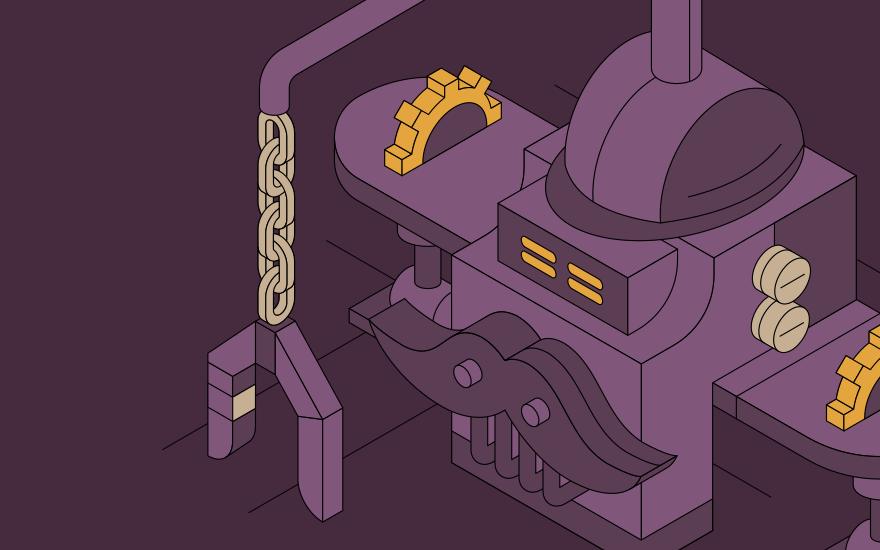
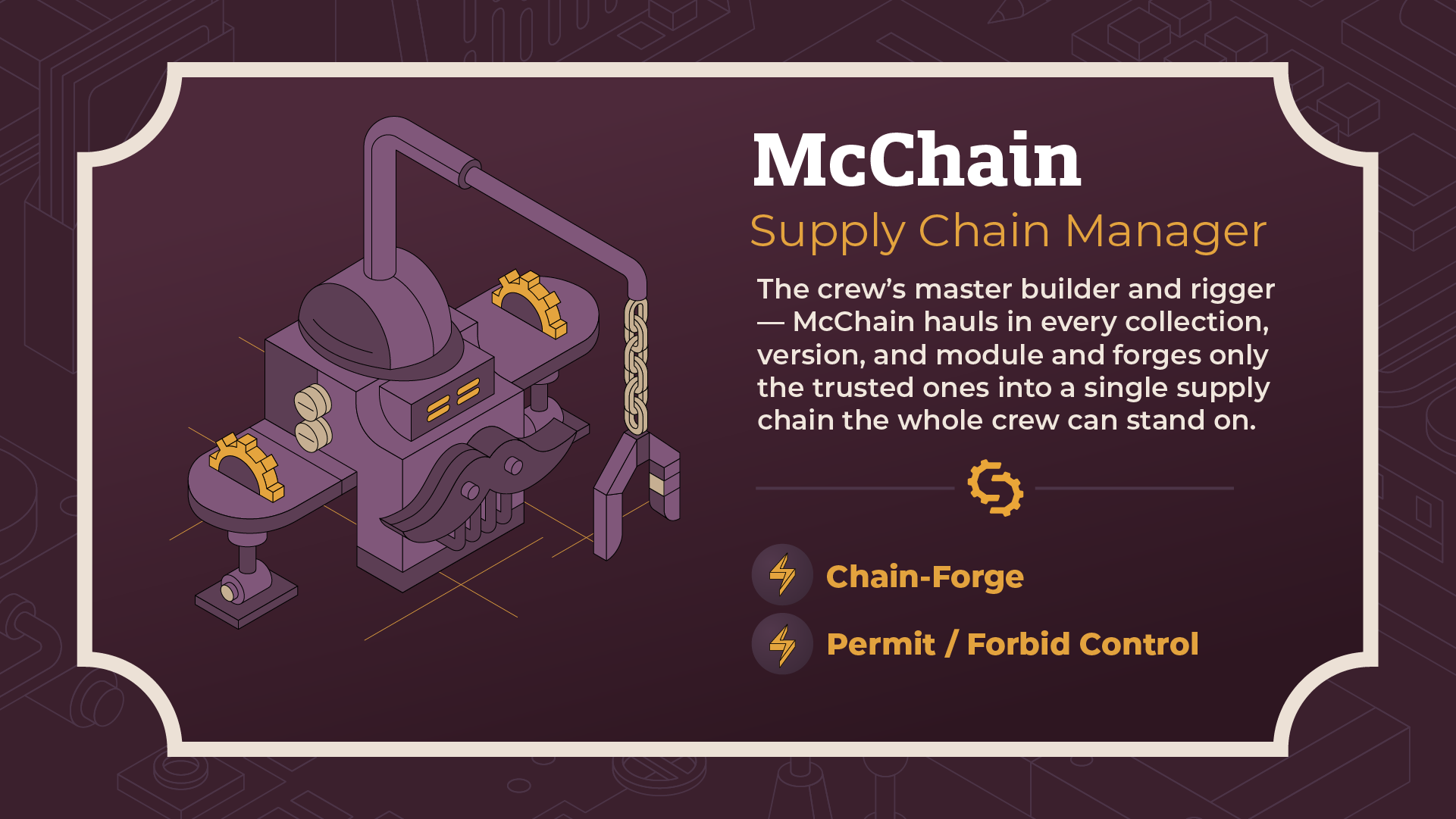
McChain is the Spotter Crew’s Supply Chain Manager. You’d know him anywhere by the handlebar moustache — his trademark. The rest of him is built for the work: a boiler-bodied machine with side platforms and brass cogs, a gooseneck crane arm, and a chain with a claw grip for hauling components into place, backed by a panel of gauges and dials that checks every link before it’s allowed through. He works out of a highly organized logistics center, where every check that passes through the crew gets stored and categorized before it moves on.
He’s the most stone-faced member of the crew. No dramatics, no small talk — just a flat, watchful expression that never seems to change. The team has learned to read it anyway. Nothing gets waved through on McChain’s watch by luck; if he clears it, it’s because he checked it.
“Forge it. Link it. Ship it.” — McChain
What McChain Does: Supply Chain Management in Steampunk Spotter
McChain represents Steampunk Spotter’s Supply Chain Management feature — the checks that happen before a scan even begins.
Every Ansible Playbook depends on things outside the playbook itself: collections, individual modules, and even the Python versions they run on. Spotter’s built-in checks look at what your playbook does. McChain looks at what your playbook is built from.
He works off permit and forbid lists your organization defines upfront — but McChain doesn’t just check them once and move on. He hauls in every approved collection, module, and Python version and forges them into one solid supply chain; anything unapproved stays out, org-wide, no exceptions.
If it’s not on the list, it’s not getting in.
Why Supply Chain Control Matters
Ansible Playbooks are the visible part of your automation. Underneath them sits a much bigger structure — collections, modules, and dependencies often written by people you’ve never met. Once a team scales past a handful of playbooks, “everyone just knows which ones are safe” stops working. Someone forgets, someone’s in a hurry, and a weak link ends up load-bearing in production.
McChain doesn’t rely on anyone remembering the rules. He checks every collection, module, and Python version against the list your organization actually defined, and he doesn’t let a weak link into the chain — every time, before the scan even starts.
What McChain Looks Like in Practice
When a playbook’s dependencies reach McChain’s checkpoint, he runs through his routine:
- Chain-Forge — hauls in scattered components and forges them into one solid, load-bearing supply chain the rest of the crew can stand on.
- Permit List — what’s explicitly approved.
- Forbid List — what’s blocked, stopped automatically no matter who wrote the playbook.
Only once the chain holds does the rest of the scan begin.
The Rest of the Crew Builds on What He Forges
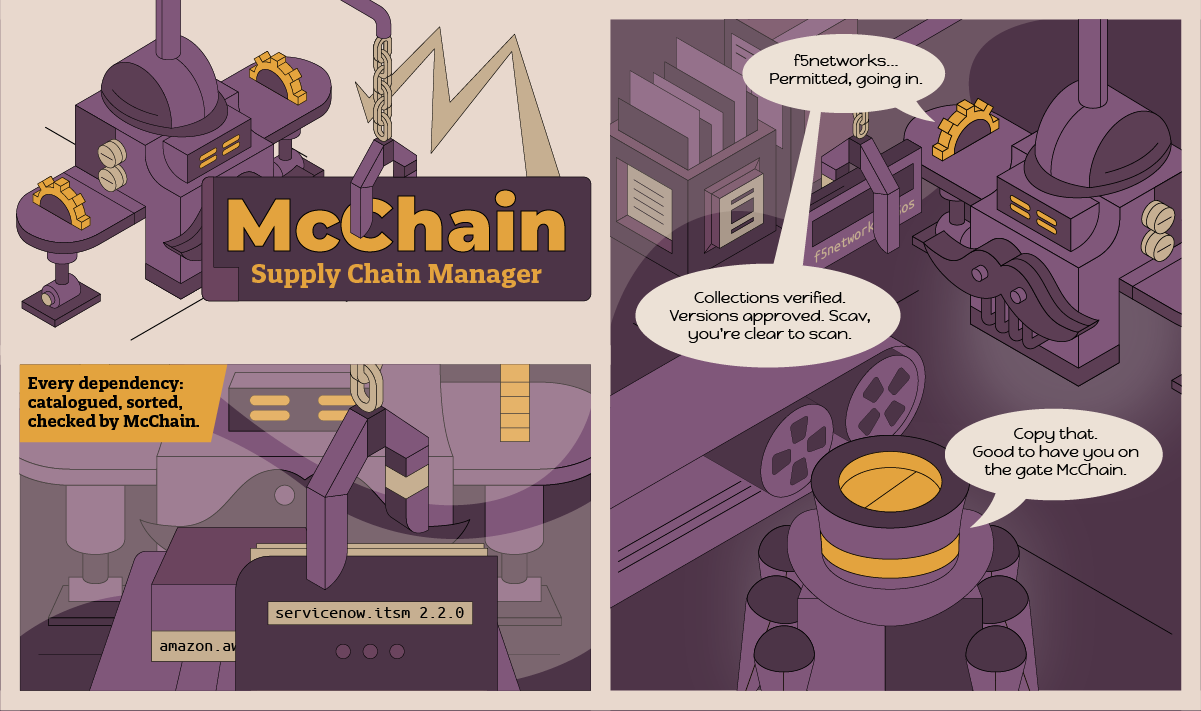
Nobody double-checks McChain’s work — that’s the point of having him. Scav depends on him most directly: before Scav applies his scanning, McChain has already confirmed that every dependency in play is approved. His groundwork complements Chuck’s check management too — Chuck decides which checks run, McChain decides which external components are even allowed to reach them.
“Collections verified. Versions approved. You’re clear to scan.
Start Controlling Your Supply Chain
You can’t scan your way out of a supply chain problem if unapproved components are already inside your automation. Steampunk Spotter’s Supply Chain Management — the feature McChain runs — stops that at the door.
Book a free script assessment and see exactly which collections, modules, and Python versions are currently allowed into your Ansible automation.