Steampunk Spotter app: Gain Insights into Ansible Automation Performance, Health, and Security
July 23, 2024 - Words by The Spotter team - 3 min read
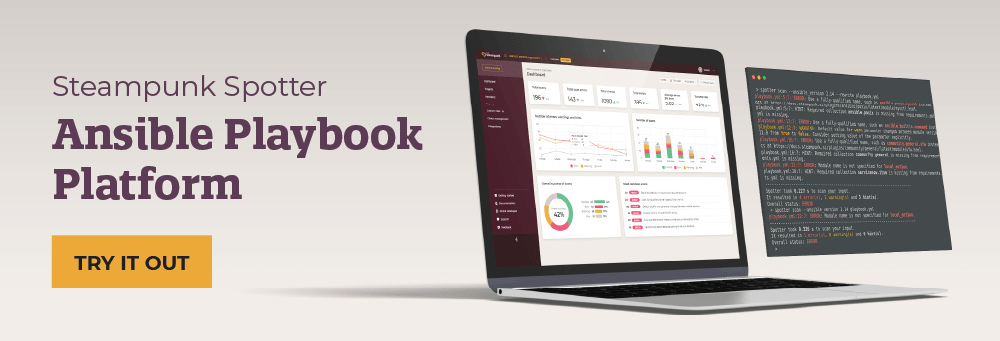
Steampunk Spotter , a powerful Ansible Playbook Platform, has an easy-to-use web interface called the Spotter App that allows you to gain insights into playbook performance, collaborate and manage teams in a shared workspace, tailor checks to your specific needs, and effectively optimize automation through a centralized platform. Let’s dive into Spotter App features.

Analyze Scans
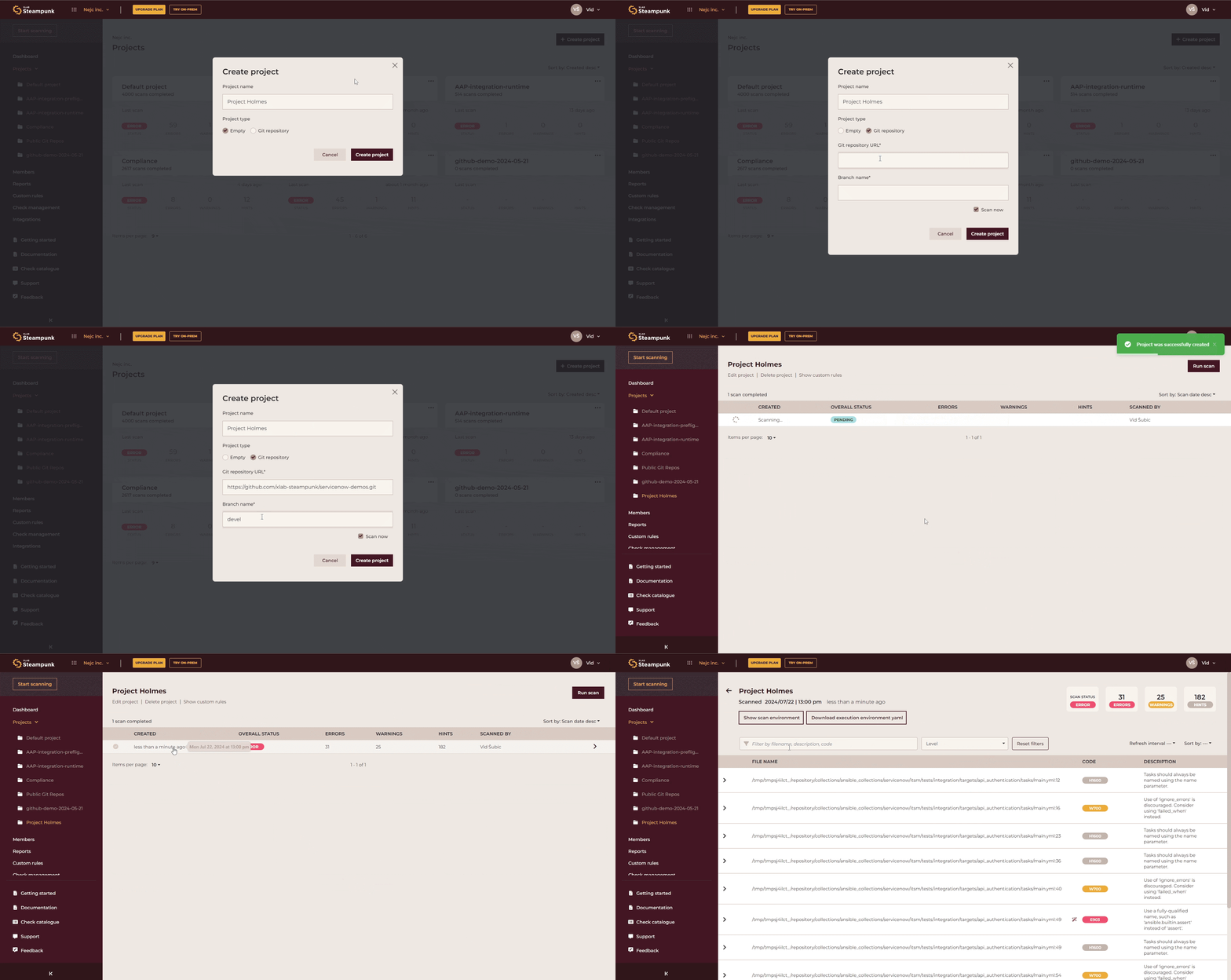
Regardless of where the playbooks are scanned, whether via Spotter CLI , CI/CD or IDE integrations , the history of all scans is available in the app, where you can track the history of each scan and observe how playbooks have improved over time. View detailed summaries of all issues, complete with descriptions, and share actual code snippets with your team to speed up troubleshooting.
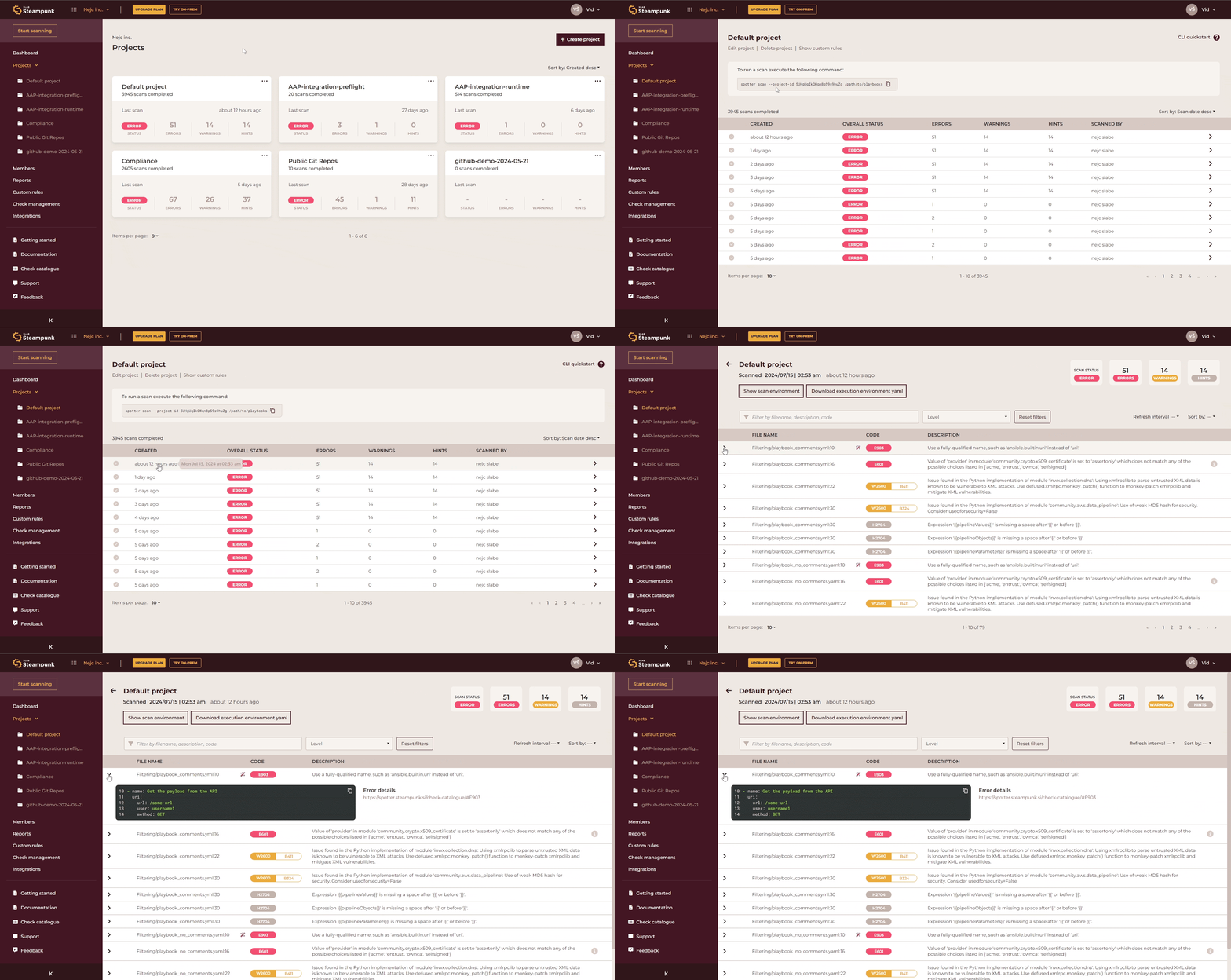

When examining the issues, simply click on the numeric code icon which will take you into the check catalogue and see your errors, hints, or warnings in more detail, with helpful good and bad examples of playbooks.
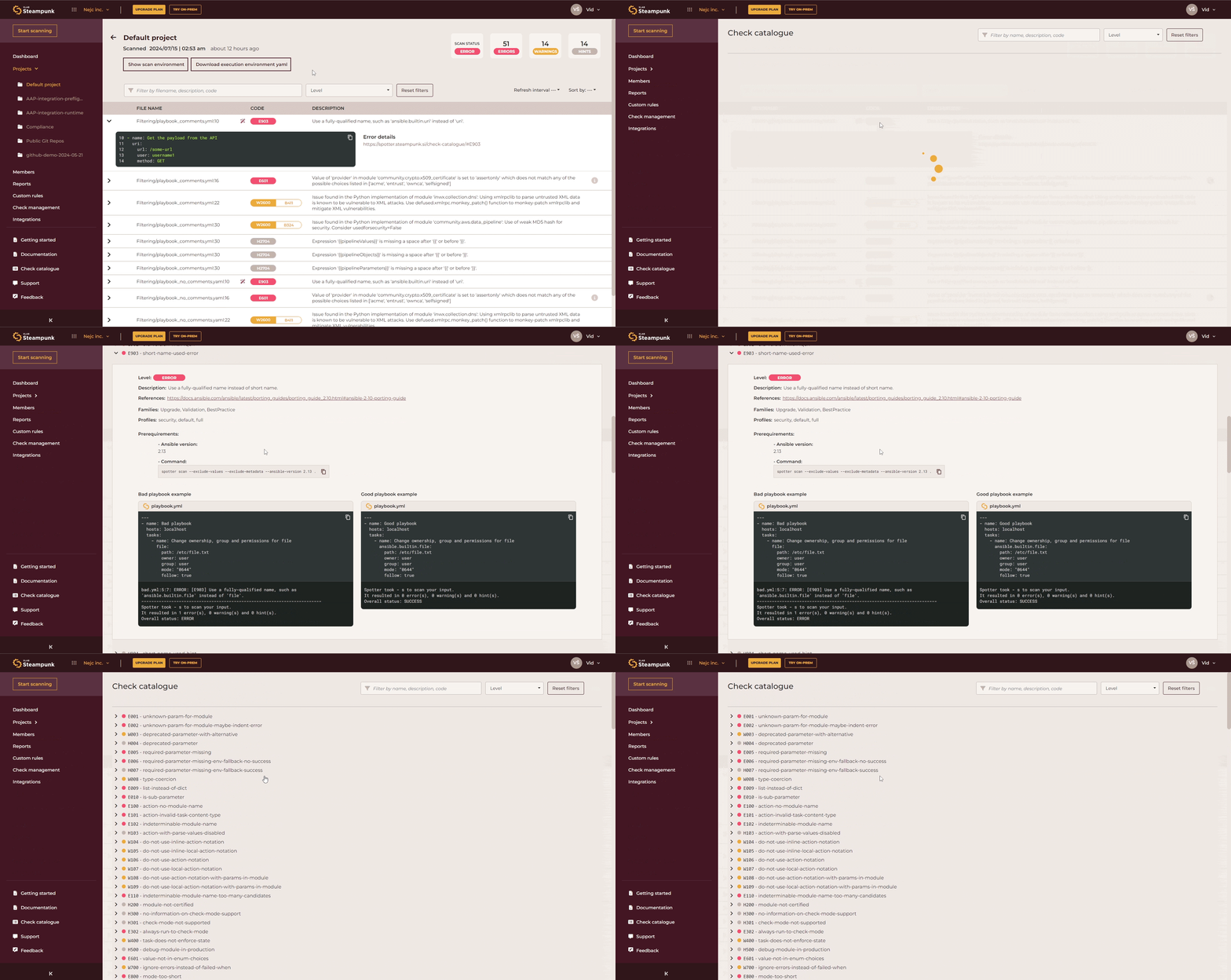
Inspect scan environment to see Ansible and Python versions, installed collections, and Ansible configuration overrides and download execution environment YAML files.
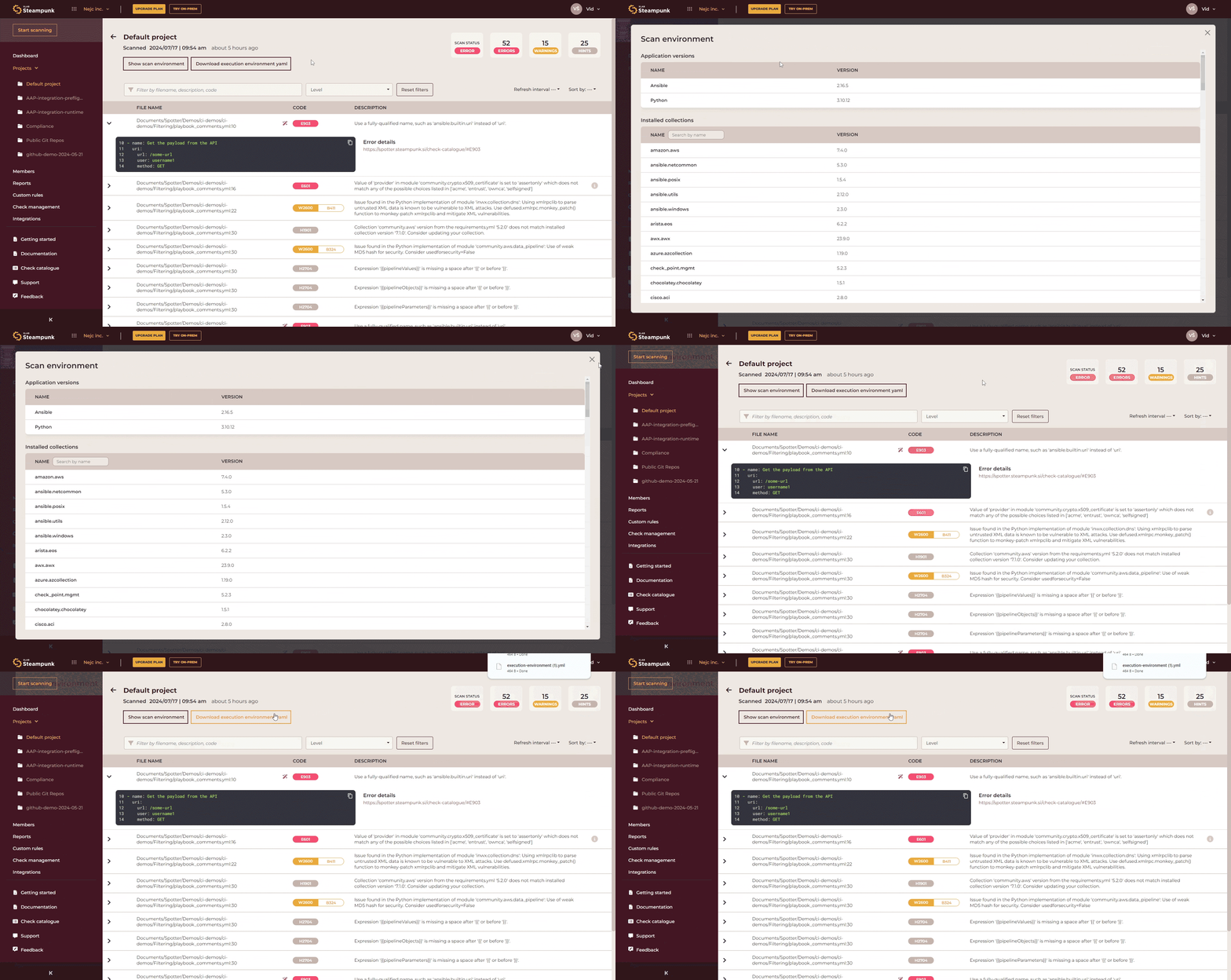
Check Quality of Git Repos
Automatically monitor the quality of your publicly accessible Git repositories and gain valuable insights without the need for complex CI/CD pipelines. It’s perfect for keeping an eye on the health of open source projects you rely on for your own development.
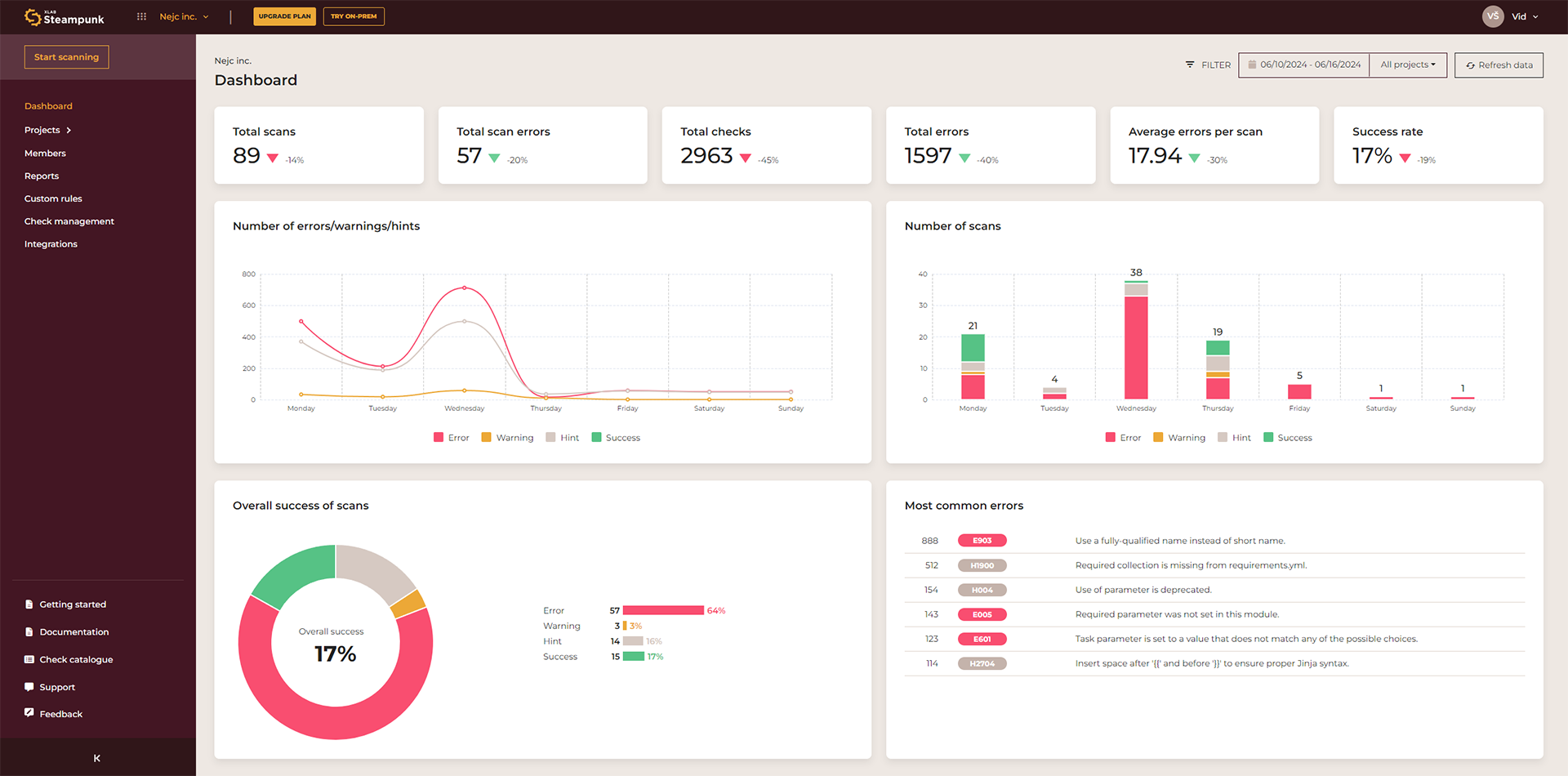
Access Crucial Automation Data
The dashboard provides key information, allowing you to monitor scan activity, identify the most critical errors, track performance, and manage playbooks effectively.
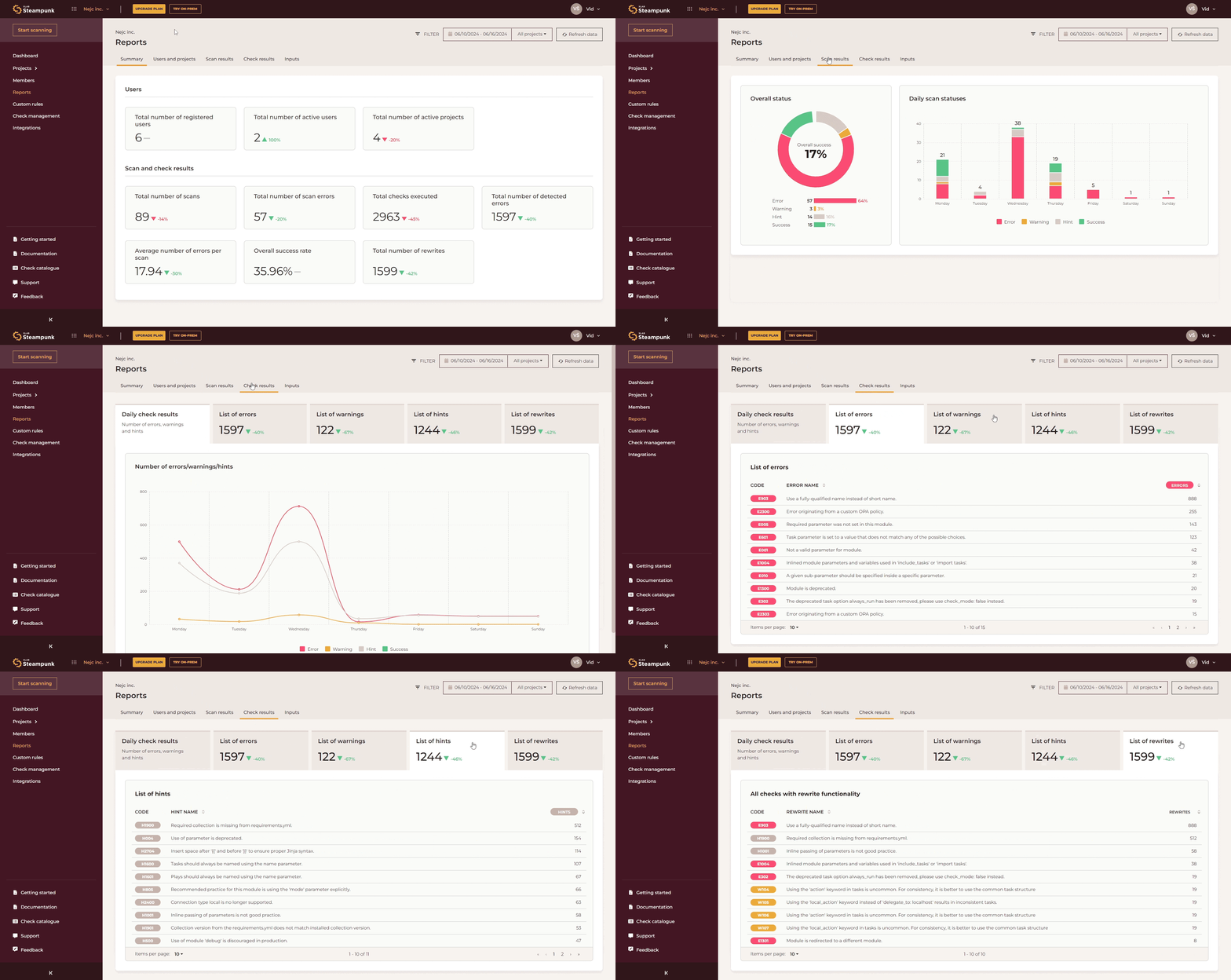
Analyze Playbook Performance
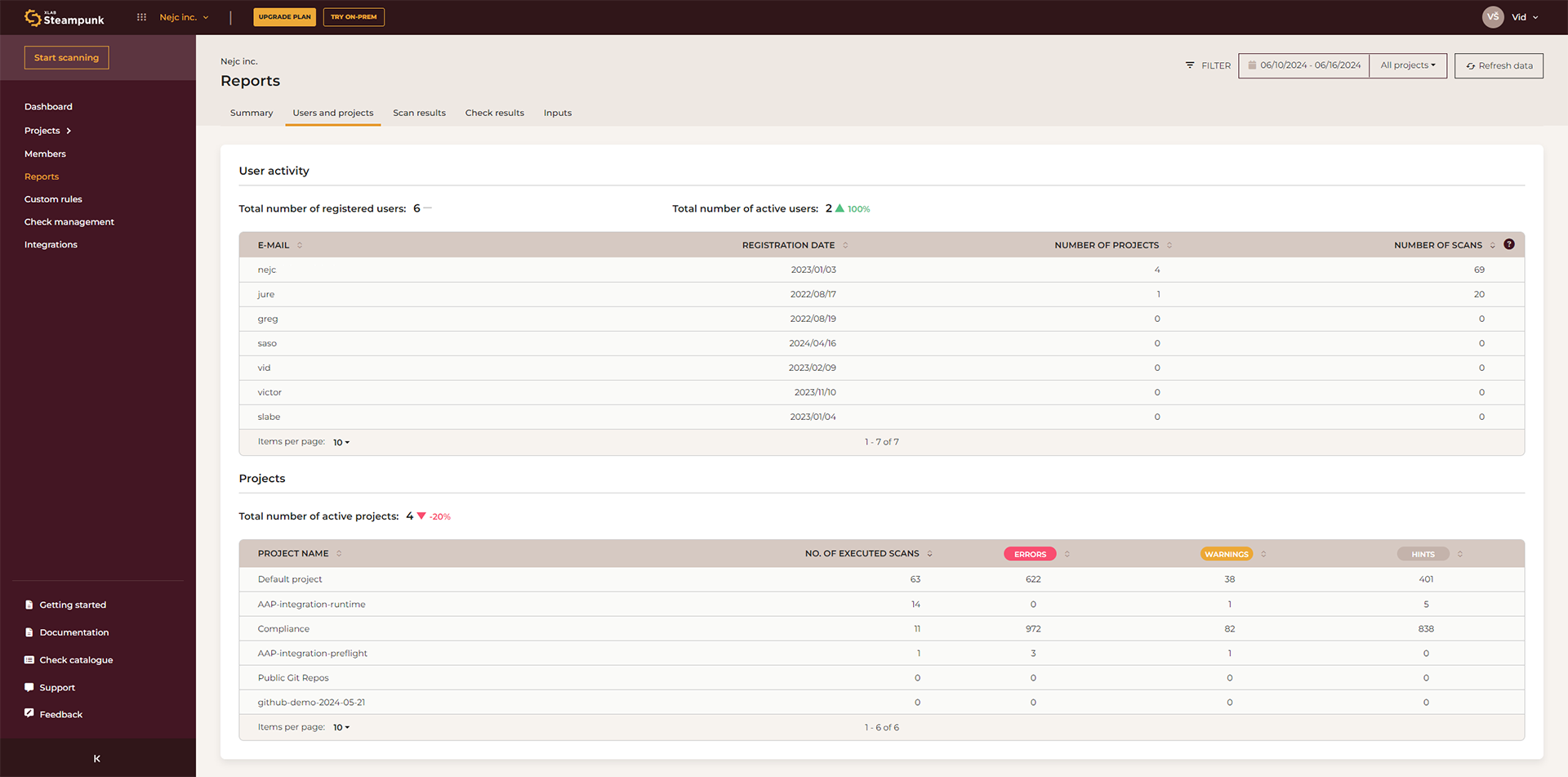
Generate comprehensive reports on your playbook performance and security, highlighting potential areas for improvement and providing valuable insights overall Ansible infrastructure’s health. View detailed information on all errors, warnings, and hints that Spotter has found in your playbooks. See which issues Spotter automatically fixed to understand how much manual work and time it saved you.
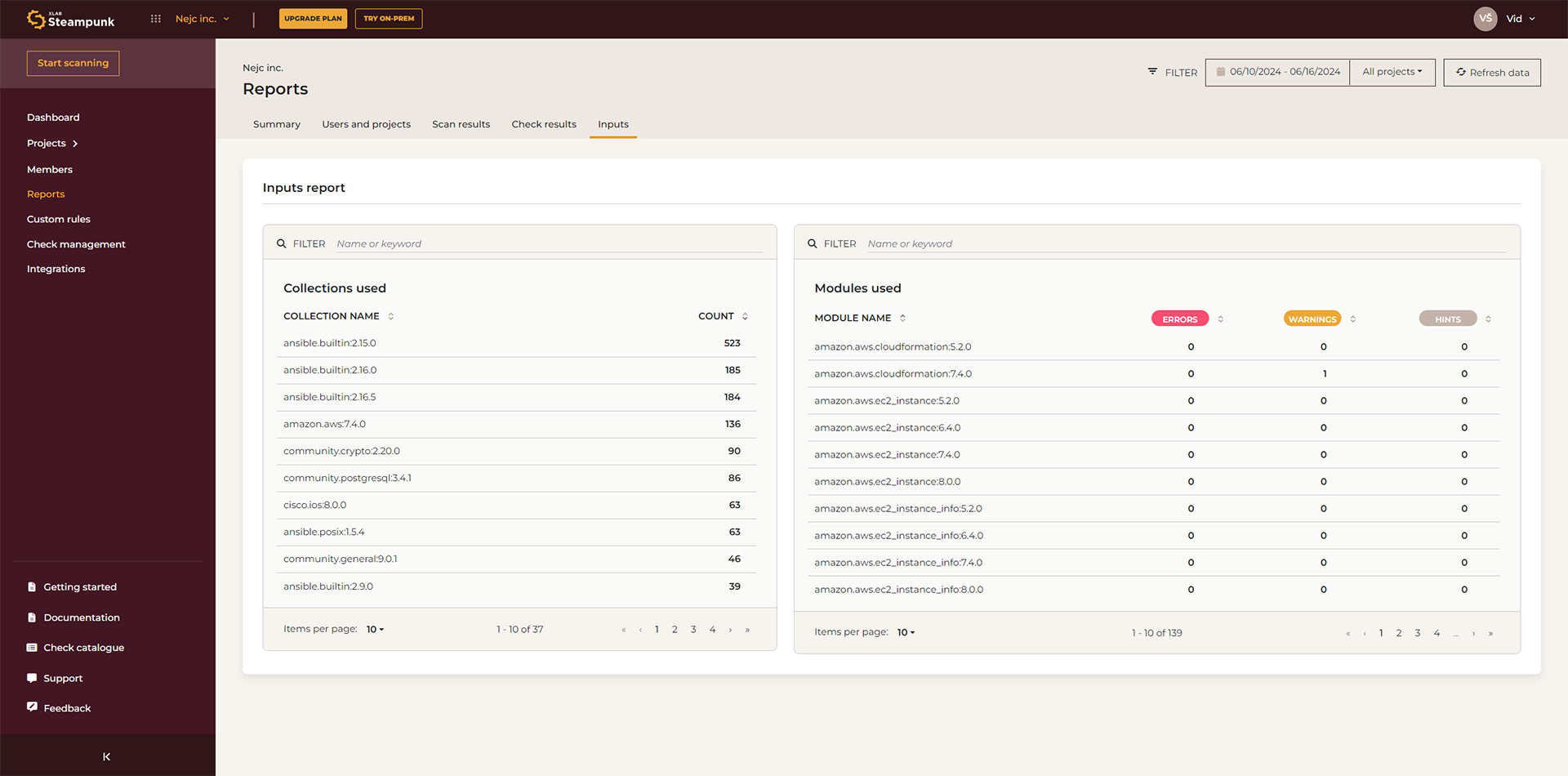
Unify Playbooks
Easily check all versions of collections and modules used in your playbooks. Update them to the latest version to optimize your playbooks, simplify standardization of versions, facilitate Ansible upgrades, and further increase your efficiency.
Collaborate & Manage Teams
Bring your automation team together in a shared workspace. Stay informed on user activity, enable cross-departmental collaboration, simplify troubleshooting, accelerate playbook improvement, and gain a clear understanding of team challenges.
Customize & Manage Checks
Spotter allows you to customize scans to enforce security and compliance. The easily navigable app enables different team roles to actively participate in automation, without requiring Ansible expertise. For example, security teams can add or enforce specific policies with a single click.

Custom Policies
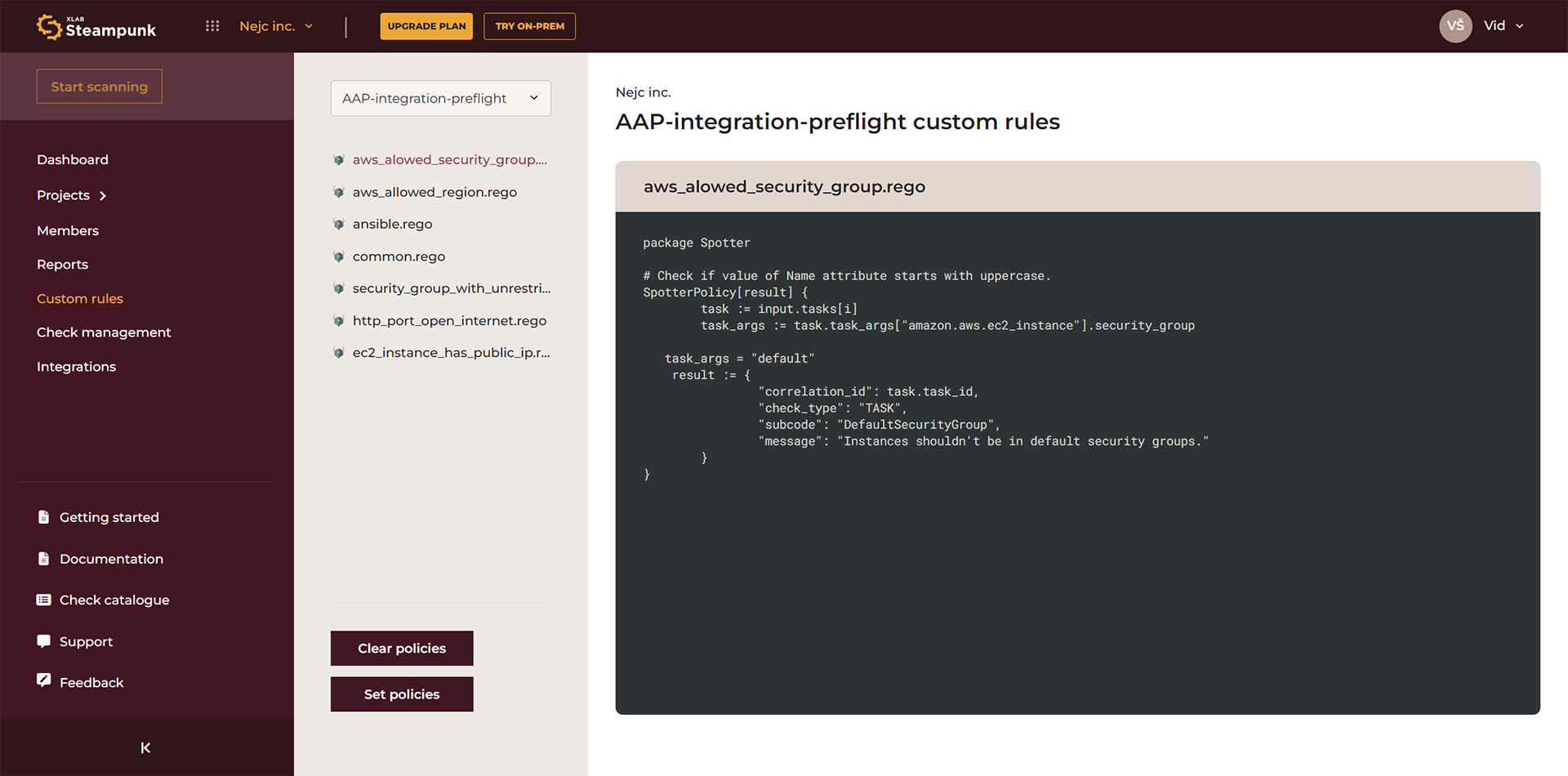
Add your own policies to ensure all playbooks meet your specific needs, requirements and use cases. Set custom policies simply by uploading a file or a folder. As Spotter supports custom policies written in Rego, a universal human-readable language, no programming knowledge is required, so different teams can easily access and manage custom policies.
Skip or Enforce Checks
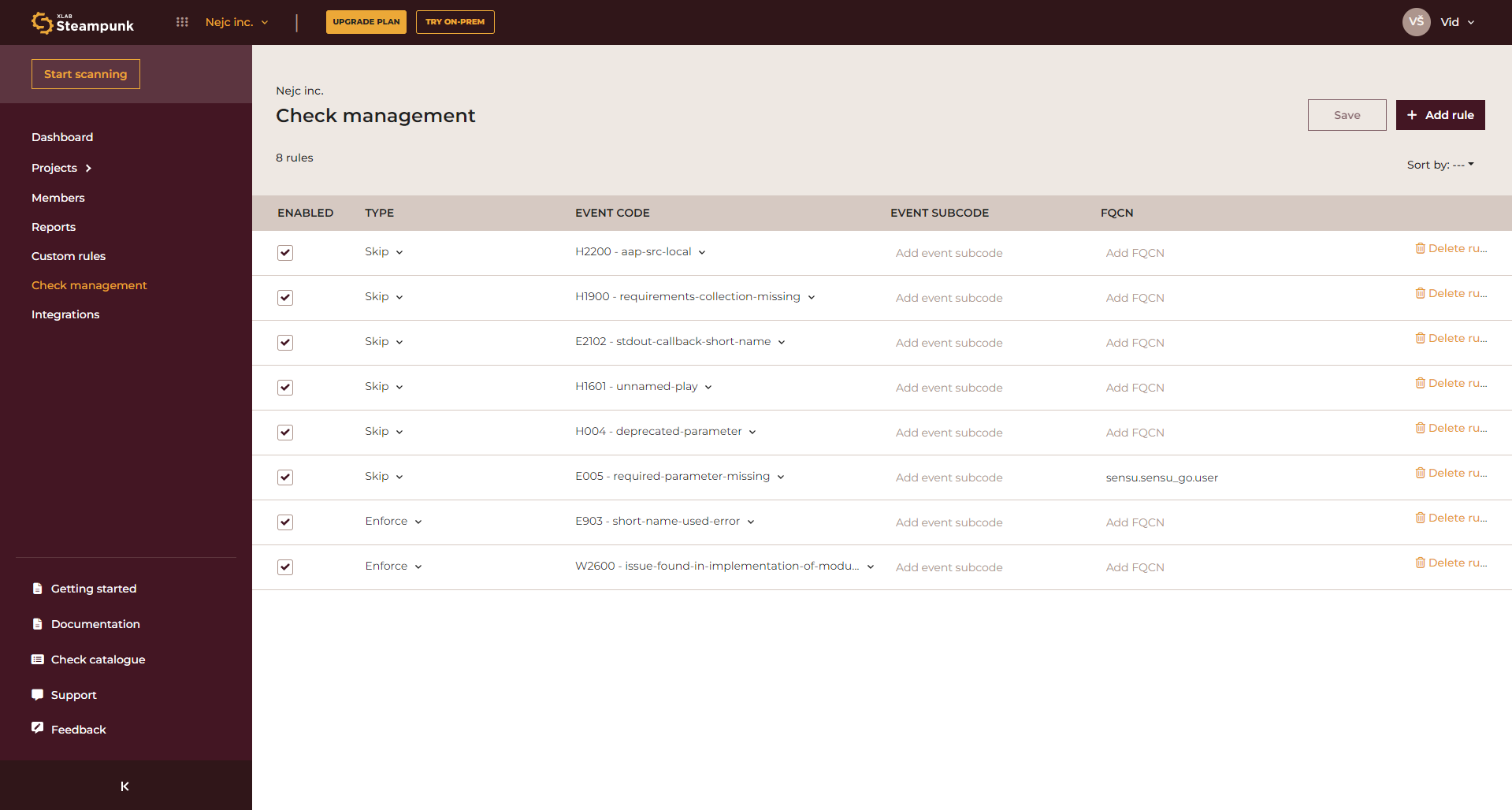
Control which checks to skip or enforce across all automation workflows. Guarantee that critical checks can’t be bypassed, prevent unauthorized modules in playbooks through enforced checks, or optimize performance by permanently skipping pre-determined, acceptable issues, saving your team valuable time.
Manage Supply Chain
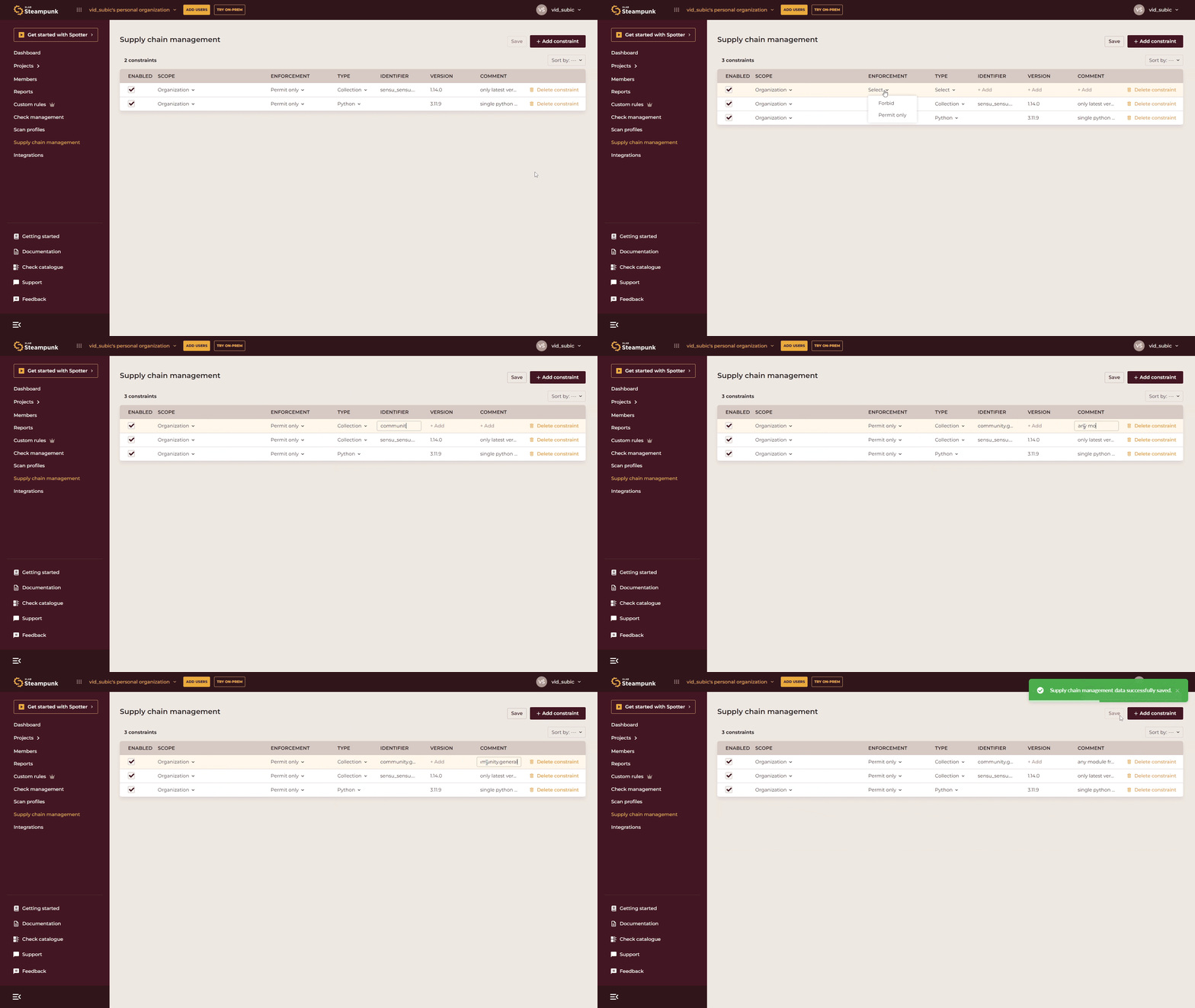
Spotter provides a centralized system to control Ansible content, ensuring that automation dependencies like Ansible runtime and collection versions comply with security and compliance policies. It allows security teams to approve safe versions, blocking vulnerable or unapproved software, while playbook writers focus on automation logic without needing deep Python expertise.
Set Custom Scan Profiles
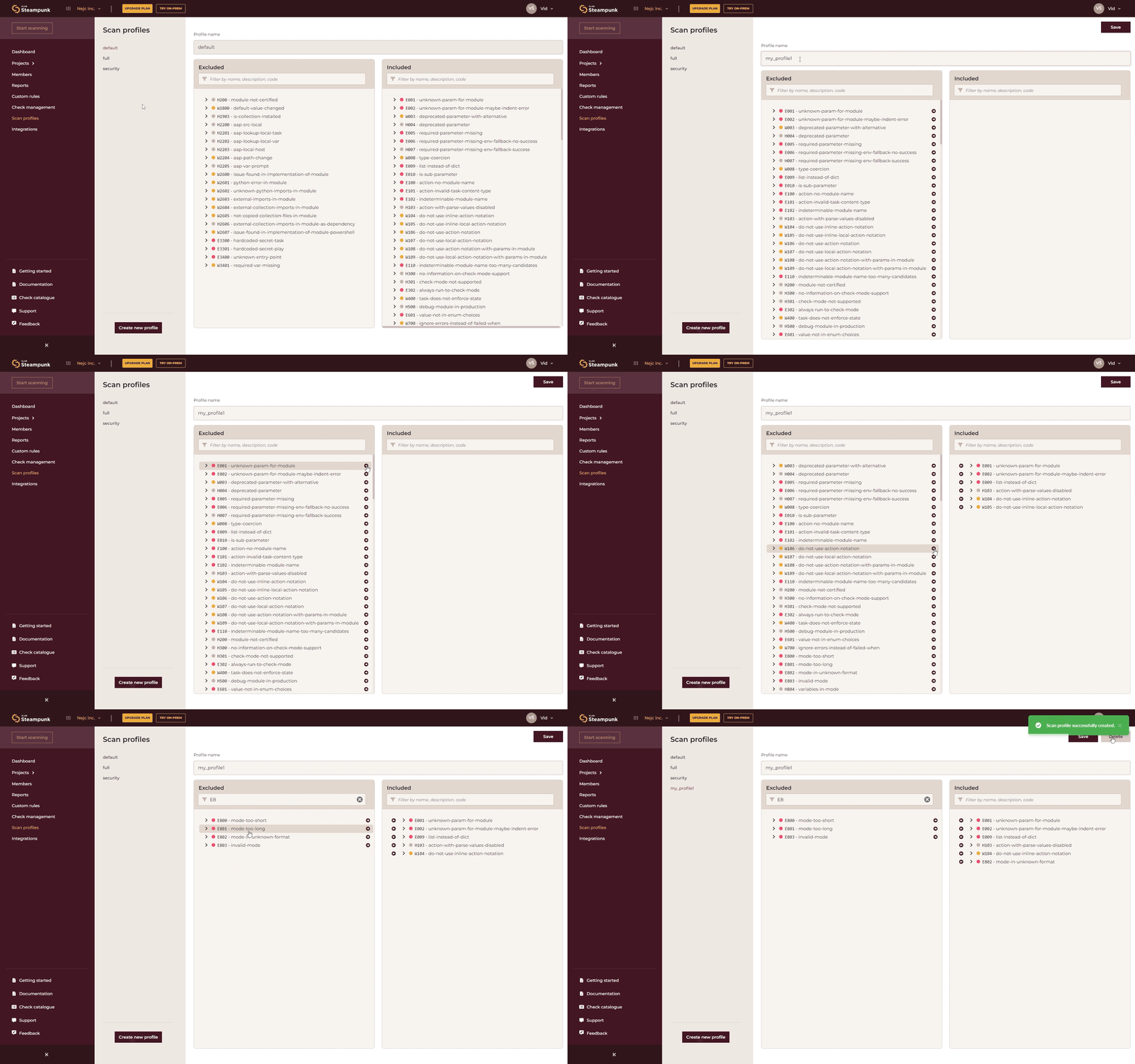
Spotter offers different scanning profiles to help you align scan results with your objectives. In the Spotter App, you can view a detailed list of all checks included in each predefined scan profile, along with their descriptions, and create your own set of checks tailored to specific environments, projects, and needs with just a few clicks.
Outro
By offering both a CLI tool and a web interface, Steampunk Spotter ensures that a wide range of team members can effectively contribute to and interact with the automation processes and offers detailed analysis and visualization, enhancing understanding and decision-making. Get a live demo today.
Explore More
- Steampunk Spotter Demo
- Spotter 101 videos
- Safeguard and Optimize Red Hat Ansible Automation Workflows with Spotter
- Steampunk Spotter and Ansible Lint comparison